Hospitality, Safari, Web Design
Your lodge website has two audiences: guests and the agents who send them
Safari lodge and resort website design for two audiences: the guests agents send you, and the agents who need rates, fact sheets and fast replies.
, 5 min read
"Most of our guests come through agents. Why would we spend on a website?" It's a fair question for a camp in the Serengeti or a lodge outside Arusha, and the numbers partly back it up.
In Tanzania's 2024 international visitor exit survey, just under 51% of visitors said they first heard of the country through travel agents or tour operators. Another 36% heard through friends and relatives, and only 5.8% first found it online, as Tourism Update reported.
Hearing about a country and choosing a lodge are different steps, though. Once an operator suggests your camp, two people need something from your safari lodge website: the guest, who wants to know the place is real and worth the money, and the agent, who needs your rates and terms to build the quote.
Below, we show how a site can serve both, using concept sites we designed for invented businesses such as Mawio Camp. Their names and rates are made up.
What a referred guest checks
A guest who arrives through an agent or a friend isn't comparing fifty lodges. If they look you up, they're checking one name someone gave them, and your website's first job is to confirm that recommendation quickly, on a phone, before doubt sets in.
The survey covers Tanzania only. If your lodge in the Masai Mara, near Bwindi or on Lake Kivu takes much of its business from operators, the same logic applies to you.
A referred guest is checking a handful of things:
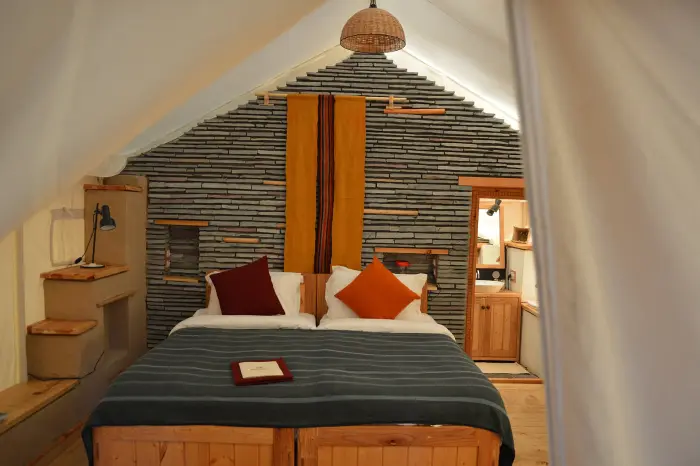
- The tents or rooms they'll sleep in. Mawio, a concept nine-tent camp on the Serengeti's Moru Kopjes, shows each of its three kinds with its size, bed, bathroom and what's outside the door.
- What a day looks like. Mawio walks through one from the 05:30 tea at the tent to the dawn drive, bush breakfast, the quiet hours, the sundowner and dinner by the fire.
- When to come. A month-by-month wildlife calendar shows where the herds are, how much rain falls and the day and night temperatures, with a note that herd positions shift every year.
- How to get there. The concept gives the flight time from Arusha to the Seronera airstrip, the transfer to camp and the road route through Ngorongoro.
What the agent needs from you
An agent building a quote needs your rates per person and per season, the child and single rules, what's included, the park fees and your deposit terms, all in one place. Every detail they have to email you for slows the quote down, and an agent with a deadline may quote a lodge that's easier to price.
Mawio's rates section is built for that reader. It sets out green season (April, May and November) and high season for each tent, per person per night, sharing. It names the single supplement, the half rate for children aged six to fifteen and the two-night minimum.
Park and concession fees get their own line, passed on at cost, with an estimate per adult and per child that's confirmed on the invoice. Below that come two lists, included and not included, then the deposit, the balance date and the free date changes. An agent can price a stay from that page without writing in.
Your rates page, or a downloadable rate sheet, should cover:
- rates by room type and season, with the dates each season runs and the year they're valid for
- what's included and what isn't, with park or conservancy fees named
- child, single and minimum-stay rules
- deposit, balance and cancellation terms
- the nearest airstrip, transfer time and road time
A one-page fact sheet does the rest: number of rooms, maximum guests, power, Wi-Fi, dietary needs and accessibility. Park and conservancy fees are set by the authorities and change, so date the sheet and say which fees your rate includes. Keep your trade rates off the public page, and send them to agents on request.
Put the rate sheet link on the rates page and in your email signature, so nobody has to ask for it twice. And when the new season's rates are set, replace the file at the same address, so the link agents saved last year still opens this year's sheet.
Answer availability within the day
An agent can't send a quote until every lodge on the itinerary has said yes. A camp that answers the same day keeps that quote moving.
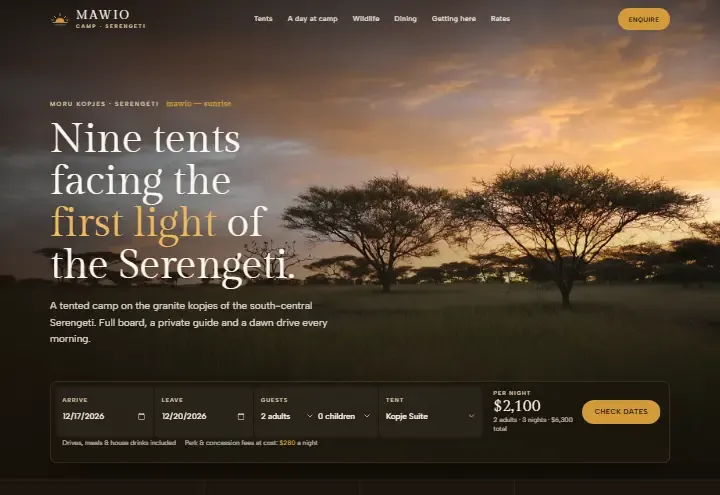
Mawio's enquiry form asks for arrival and departure dates, adults, children aged six to fifteen and the tent, then lets the sender tick extras such as a balloon flight, a walking safari, flights from Arusha or a night at the crater. A running estimate sits beside the form. The camp promises a reply from a real person within one working day, and holds a tent for 48 hours with no payment.
On a real site, that request lands in your reservations inbox or on WhatsApp with everything filled in. Give agents a direct reservations number too, so a quick "do you have two tents on the 14th?" doesn't wait in a general inbox.
Resorts at the end of the trip
Beach and lake resorts sell to the same agents, often as the last few nights of a longer trip. That might be a week in Diani after the Mara, or a lakeside stay on Lake Kivu after a gorilla trek.
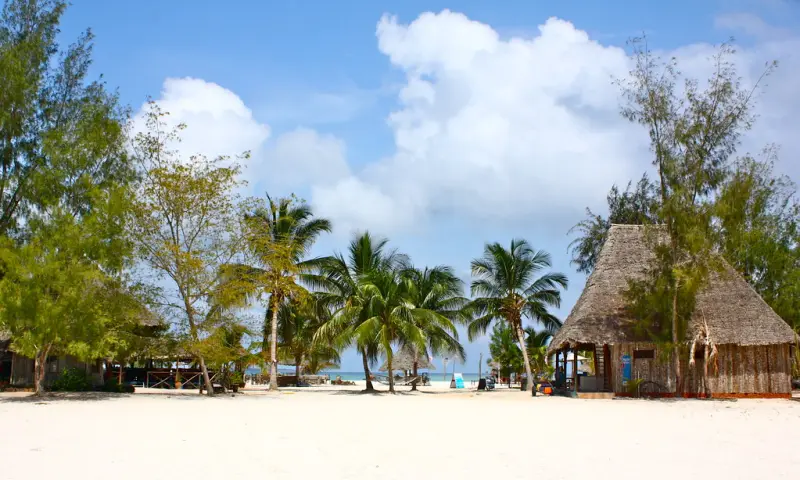
Shwari Bay, a concept beach resort on Zanzibar's north coast, speaks to that guest directly. Its getting-here section notes the daily light aircraft from Arusha and the Serengeti, and the car that's timed to meet the flight. The rules that change a price sit under the rooms: breakfast included, the seventh night free, a peak-season supplement on named dates and children under four free.
An agent can quote the beach nights from that page, and the guest can see the room they'll finish in, which is what good resort website design does for both readers. More on live prices, fees and rooms sold by name is in what a direct-booking hotel website needs.
One site, two kinds of visitor
None of this means building two websites. A rates page, a rate sheet and a fast enquiry form sit comfortably on the same site that guests browse, and every page is written for you on our website design service.
To see how this would work for a camp, lodge or resort like yours, start with our hotel and safari website page.